90% of Your Serotonin Is Made in Your Gut. Here Is What That Means for Discipline.
The Problem
You lost 100 pounds and someone found a way to make that feel bad. You deleted the apps and felt broken for four days before your head cleared. You take daily walks and somewhere along the way started calling them humiliation rituals. The behavior is working. You keep doing it. But something underneath stays flat.
That flatness is not a character flaw. It is not weak discipline or a bad mindset. It is a number. A floor your body set without asking you.
And the place that floor was set is not where anyone told you to look.
The Serotonin Floor
90% of your serotonin is made in your gut. Not your brain. Your gut.
Serotonin is the chemical your body uses to regulate mood, motivation, and the feeling that effort is worth it. When it is low, nothing sticks. You do the right things and feel nothing. You get a real result and cannot hold onto it. The discipline gurus call that a mindset problem. It is a gut problem.
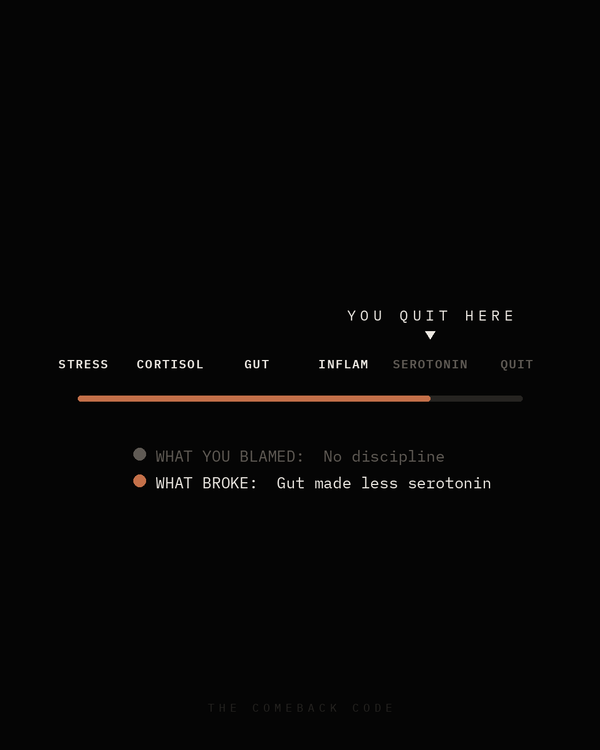
Here is how the floor gets set low. Chronic stress tells your body to produce cortisol. That is normal. But when stress does not stop, cortisol starts wearing down your gut wall. The wall gets thin. Bacteria that are supposed to stay inside your gut start leaking into your bloodstream. Your immune system reads that as an attack and fires up inflammation throughout your body.
That inflammation reaches your brain. Your brain slows down. Fog sets in. Mood drops. The signal that says "this is worth doing" gets quieter.
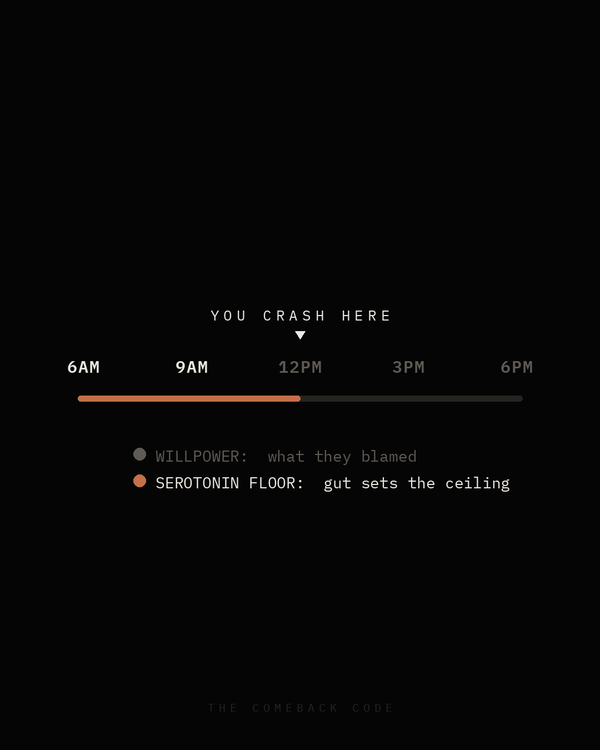
And because your gut is producing less serotonin the whole time, you are running on a low floor. Every attempt at consistency starts from a deficit. You are not failing to try hard enough. You are trying hard from a position where the biology is working against you.
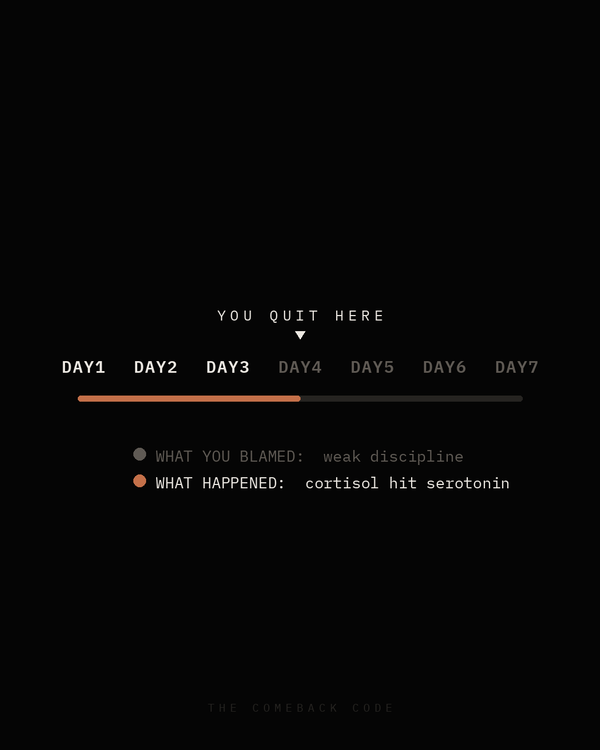
The person who deleted TikTok and felt genuinely broken for four days was not weak. They were in withdrawal from a dopamine loop that had been suppressing serotonin for months. Days five and six felt clear because the gut started recovering. They found the fix accidentally. The fix was real. The mechanism was there the whole time.
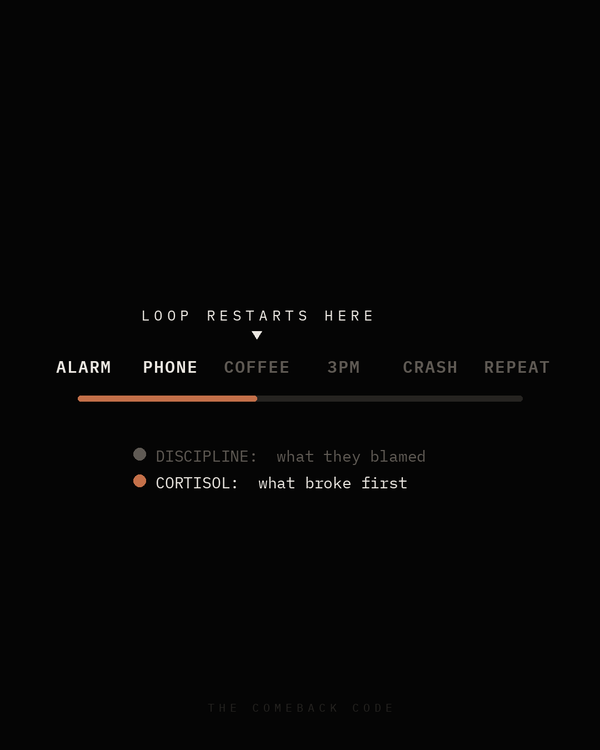
The person calling their walks humiliation rituals is doing the right behavior. The walks are working. But the shame frame around the behavior is a cortisol event. Every time shame shows up, cortisol goes up, the gut wall takes another hit, and the serotonin floor drops a little more. The behavior and the stress response are running on the same system. You cannot treat them as separate.
The Playbook
- Eat 30 grams of fiber per day, starting with one meal. Gut bacteria that produce serotonin feed on fiber. Most people eating processed food are getting under 15 grams. Add one can of black beans (15g), one apple (4g), and a handful of oats (4g) and you are already close. Do not overhaul everything. Start with one meal.
- Cut one chronic stressor for two weeks, not forever. Cortisol needs a sustained drop to let the gut wall recover. Pick the one thing generating the most low-grade background stress, whether that is late-night scrolling, a daily argument, or skipping sleep. Remove it for 14 days. Measure how your gut feels, not just your mood.
- Walk after eating, not before. A 10-minute walk after a meal reduces the blood sugar spike that triggers cortisol. It also gives gut bacteria better conditions to do their work. This is not about calories. It is about the stress signal your body sends after a big glucose hit.
- Stop logging results in shame frames. Celebrating a 100-pound loss inside a "still not enough" conversation is a cortisol event disguised as accountability. Write the number down somewhere private. Acknowledge it without an audience that will add a "but." The gut does not know the difference between a comment from a coworker and a threat. Cortisol is cortisol.
This week: Tonight, eat one high-fiber meal. Black beans on rice, lentil soup, oats in the morning. One meal. That is the whole ask.
The floor was set somewhere specific. It was set in the gut, under stress, over time. You can change the inputs. The floor moves.