Why Your Gut Produces Less Serotonin Under Chronic Stress (And What That Has to Do With Your Motivation)
The Problem
You tracked every calorie. You weighed your food. You blamed cortisol and water weight when the scale didn't move. You were not wrong to look for a reason. You were looking in the wrong place.
You tried the self-compassion advice. Got easier on yourself. Things got worse. Not because the advice was bad. Because a mindset shift cannot fix a biology problem. The mechanism was still running underneath, untouched.
The variable hiding in plain sight was not your effort. It was your serotonin. And the reason your serotonin was low has nothing to do with your brain.
The Serotonin Floor
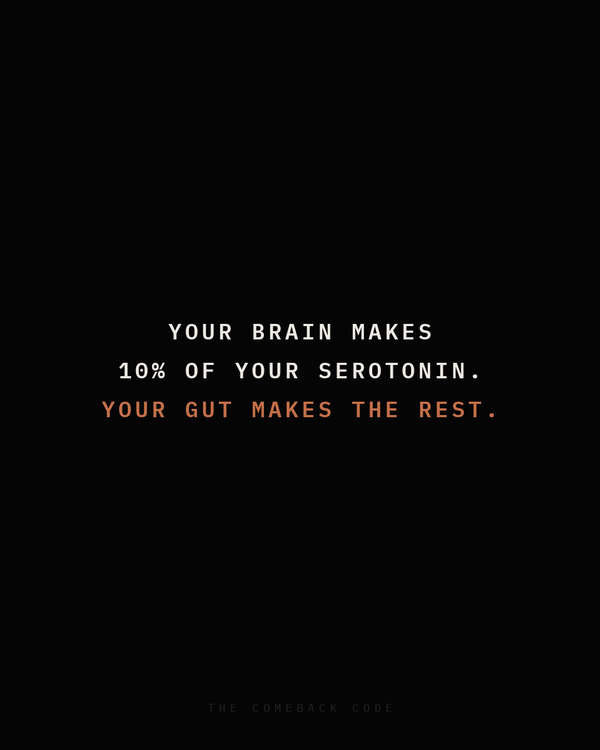
Here is what most people do not know. About 90 percent of your serotonin is made in your gut. Not your brain. Your gut.
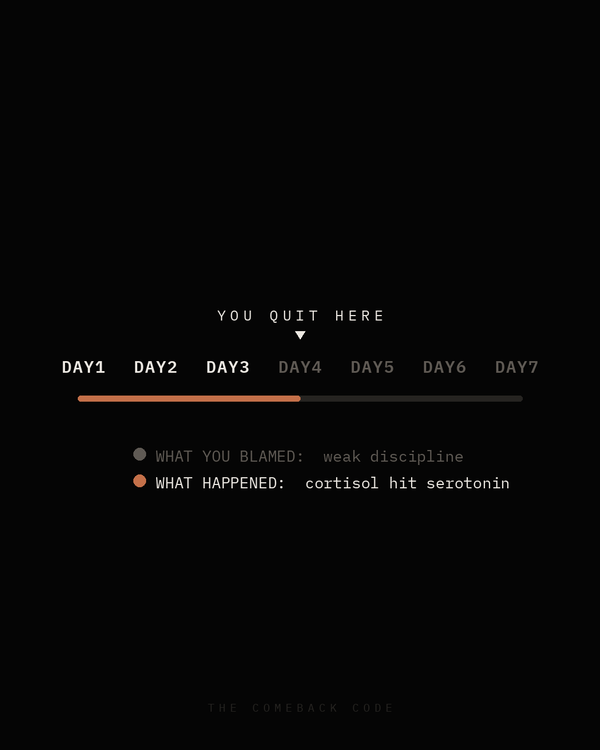
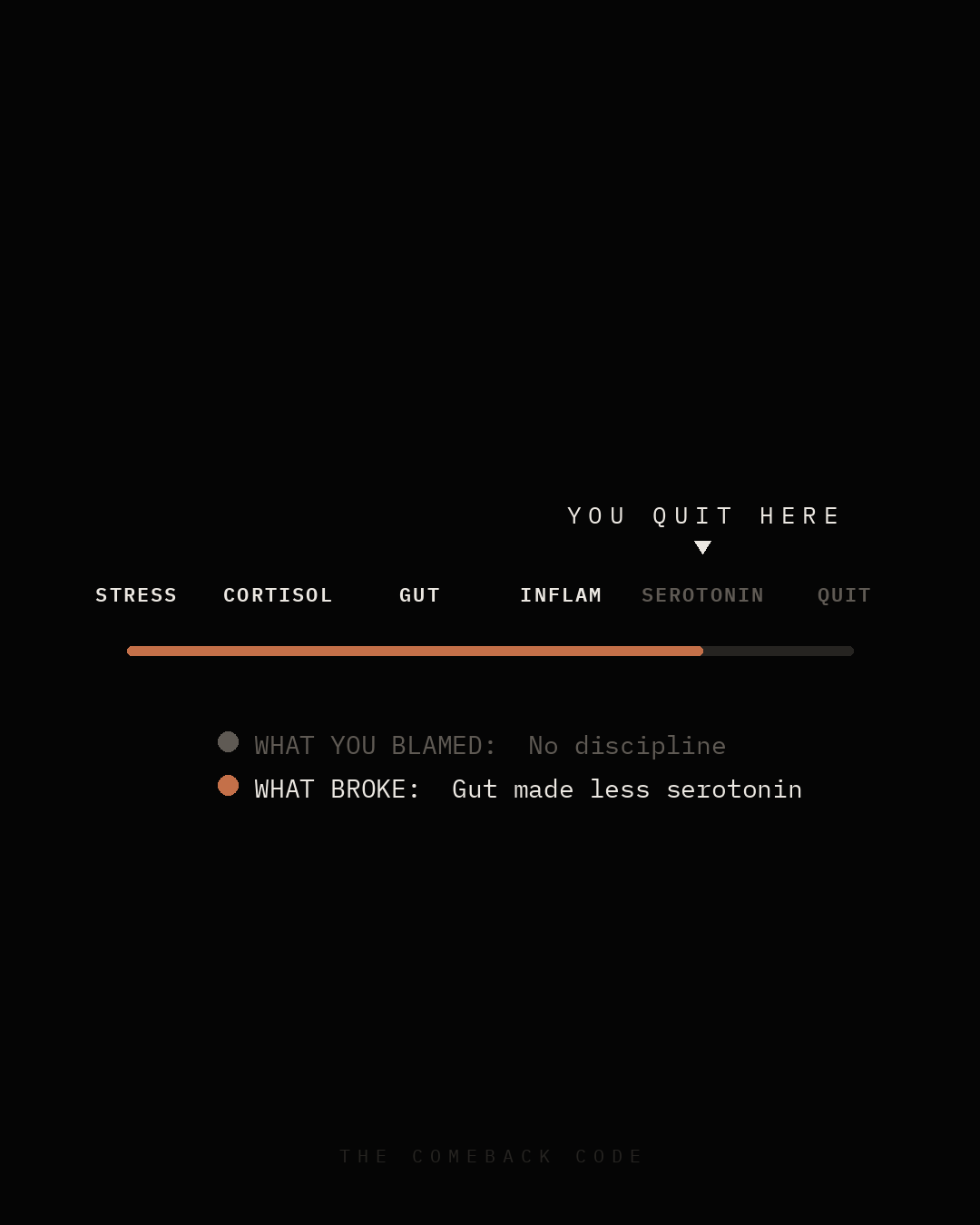
When you are under chronic stress, your body releases cortisol. That is normal. The problem is what cortisol does over weeks and months. It wears down the lining of your gut wall. When the wall weakens, bacteria and their byproducts leak into your bloodstream. Your immune system treats that as an attack. It fires up inflammation to respond.
That inflammation travels up the line between your gut and your brain. Once it gets there, it suppresses the very cells that make serotonin. Your gut produces less. Your serotonin floor drops.
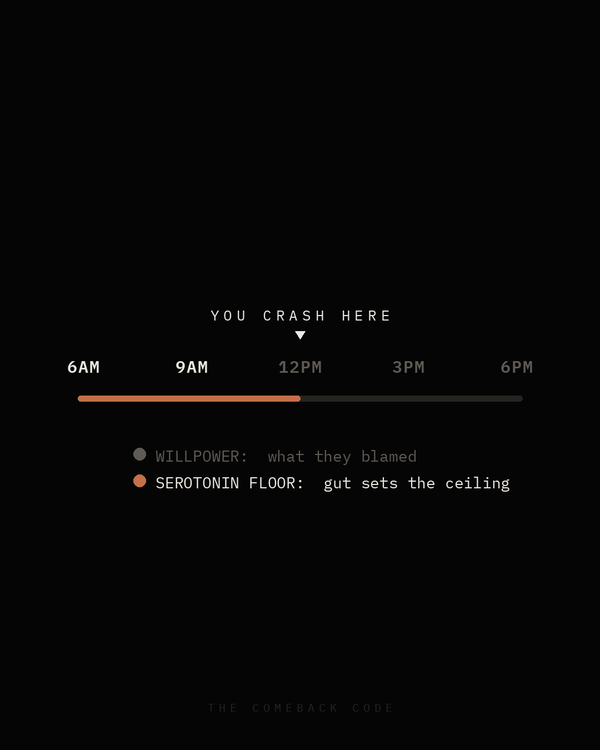
Low serotonin does not feel like sadness. It feels like flatness. Like the thing that used to make you want to train just stopped showing up. Like you can make yourself go, but you cannot make yourself care. Like discipline runs out by Wednesday every single week, and you have no explanation for why.
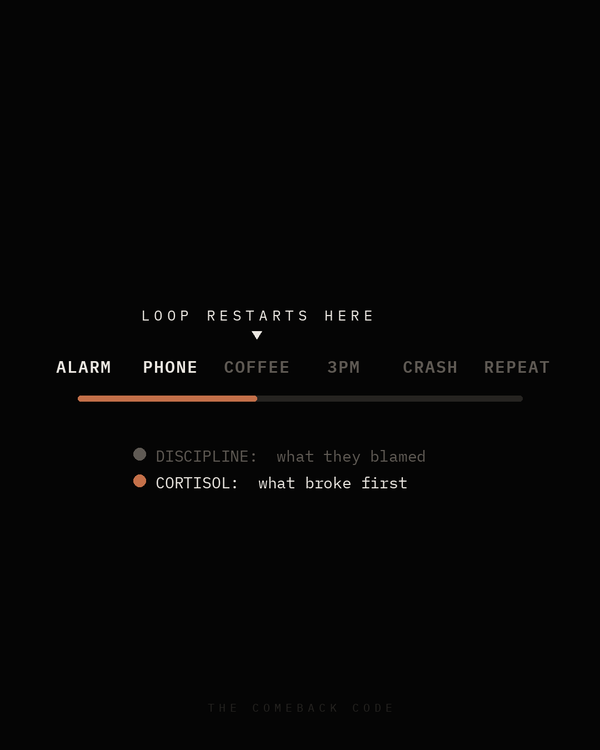
That is not a character flaw. That is a gut producing less serotonin than it should, because chronic stress has been wearing it down. The loop keeps running because the stress of failing a program adds more cortisol, which does more damage, which drops your serotonin floor further. You were not stuck because you were weak. You were stuck because the loop had no exit.
This is why the person who switched to just walking started seeing results they could not get from harder programs. Not because walking is magic. Because it was the only input that did not add more cortisol to an already overloaded system. Lower stress meant less damage to the gut wall. The serotonin floor started to rise. Motivation stopped being something they had to manufacture.
The Playbook
- Cut one high-cortisol input this week. Pick the thing in your program that feels like punishment. The 5:30am session you dread. The 1,200-calorie cut. The two-a-days. Drop one. Not forever. For two weeks. Measure how you feel by day 10. Cortisol needs a reason to come down. Removing the trigger is the first step.
- Add a 20-minute walk after your largest meal, every day. Not as a workout. As a signal. Post-meal walks lower blood sugar, reduce cortisol, and cost your gut wall nothing. Do it at the same time each day so it becomes automatic. No music required. No pace target. Just move.
- Eat 30 grams of fiber per day, split across three meals. Fiber feeds the gut bacteria that support serotonin production. That is roughly one cup of oats, one apple, one cup of lentils across the day. Specific enough to start tonight. Track it for seven days and nothing else.
- Sleep seven hours minimum, non-negotiable, for the next 14 days. Sleep is when cortisol drops its lowest. A single night under six hours raises cortisol the next day and compounds the damage. Set a hard cutoff time. The training can flex. The sleep cannot.
This week: Take a 20-minute walk after dinner tonight. No prep, no gear, no excuse not to start in the next two hours.
The people who keep restarting are not less motivated than the people who stick. They are running on a lower serotonin floor, produced by a gut that chronic stress has been degrading for months or years. The discipline industry never told them that because fixing the source does not sell a new program.