I Ran the Protocol This Week. Here Is What Actually Happened.
The Problem
You hit a real number. A hard-earned, months-of-work number. You tell someone. And the first thing they say is it's still not enough.
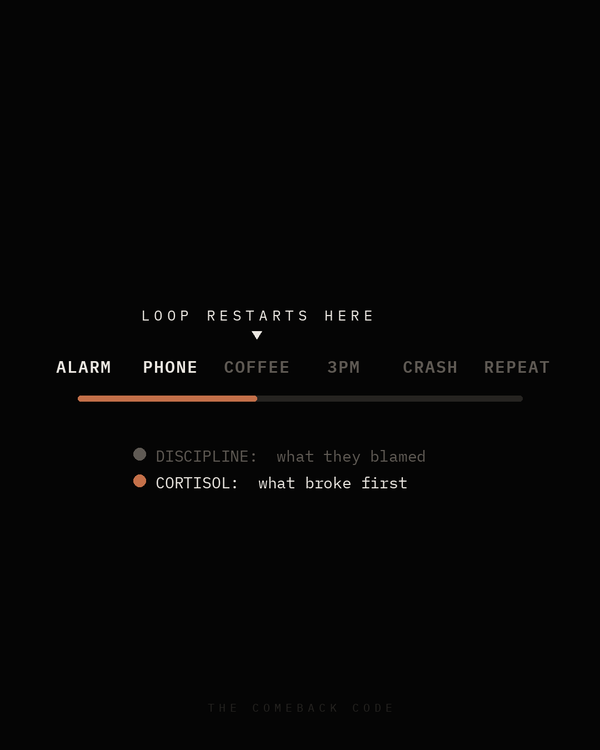
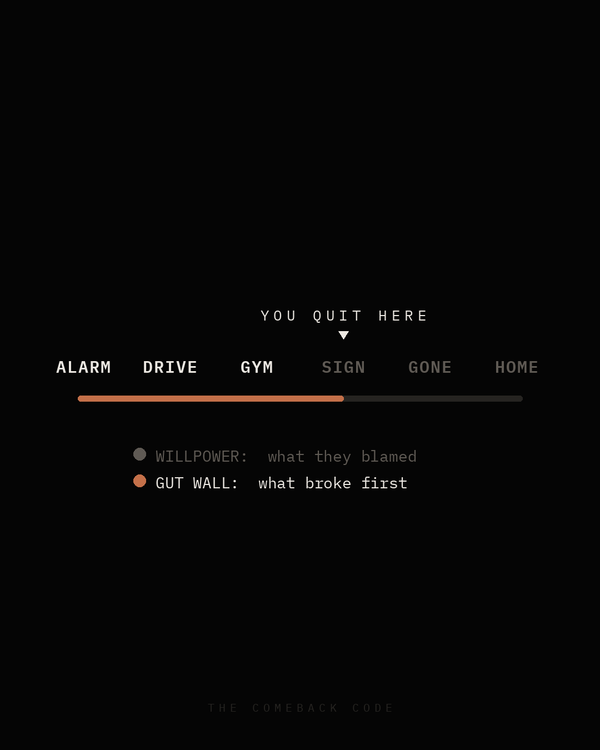
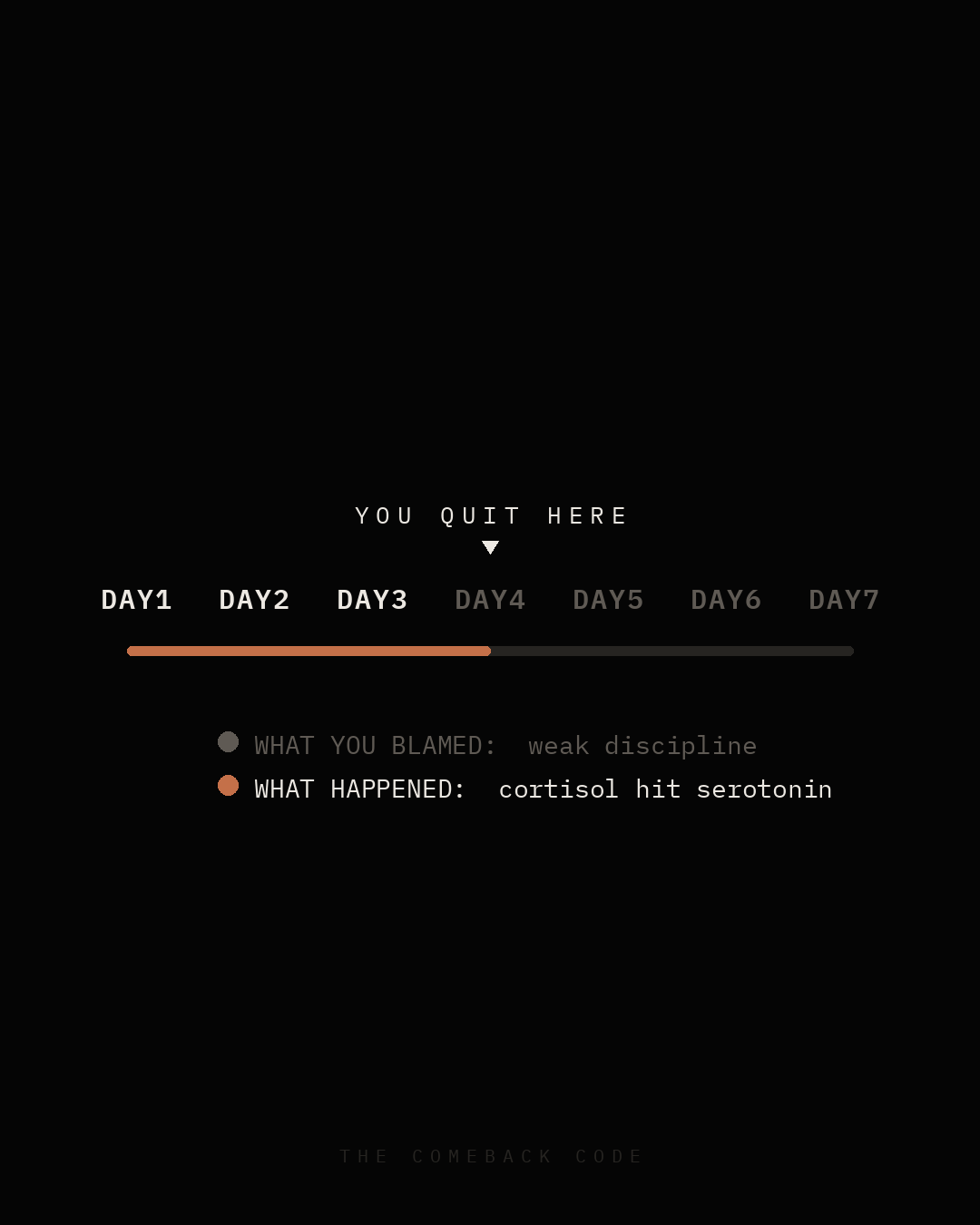
That exchange costs you something. Not motivation in some abstract sense. Cortisol. The same stress hormone that, when it runs chronically, wears down your gut wall, drops your serotonin floor, and makes the next workout feel impossible. The shame loop and the biology are the same loop.
You've also probably deleted an app, or stopped going to the gym, or changed nothing except one small daily thing. And a week later something shifted. You didn't know why. You still don't. That gap between the behavior and the explanation is where most people stay stuck.
The Shame Code
One person on Reddit called their daily walks "humiliation rituals." The post got 1,362 upvotes. The behavior was working. The frame around it was eating them alive. Both things were true at the same time.
That tension has a mechanism. Chronic stress, the kind that comes from shame and social comparison and years of restarting, spikes cortisol. Sustained cortisol wears down the lining of your gut. When that lining weakens, bacterial toxins from your gut pass into your bloodstream. That triggers low-grade inflammation throughout your body, including your brain.
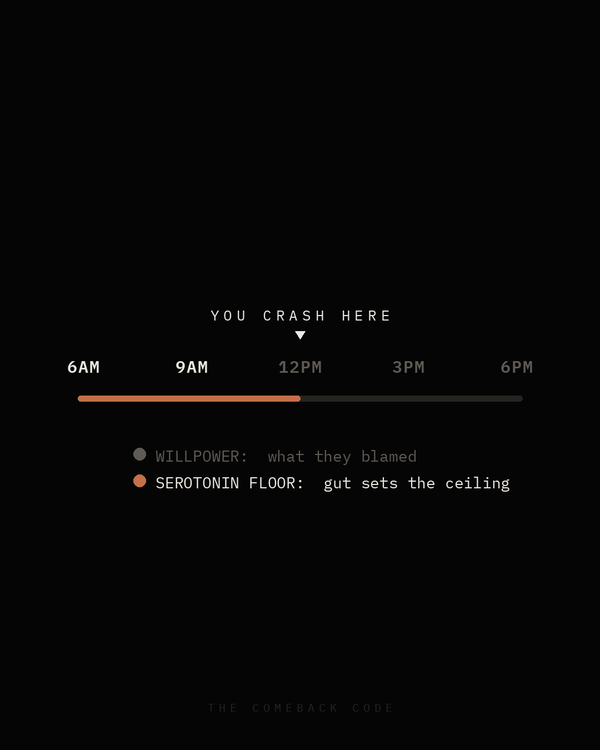
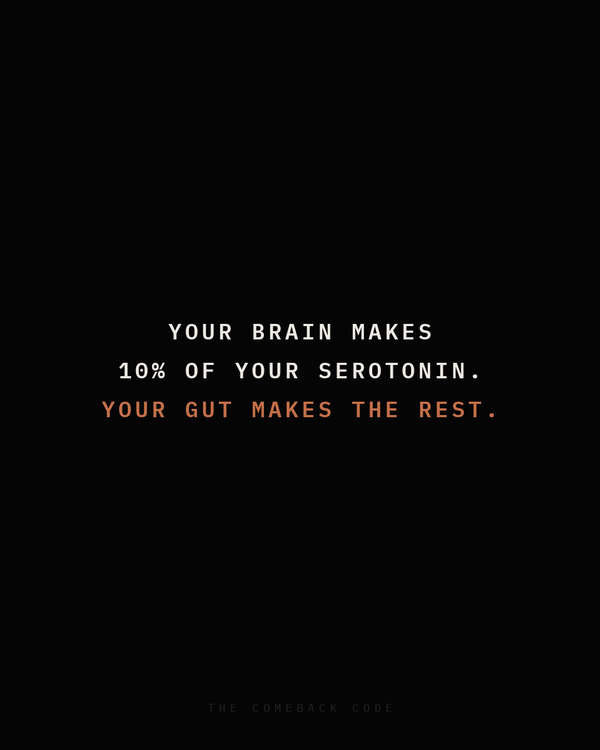
Your gut produces about 90% of your body's serotonin. A damaged gut lining sets a low serotonin ceiling. Low serotonin means low mood, low drive, and a brain that will not cooperate when you try to show up consistently.
The person who deleted TikTok and felt genuinely broken for four days before their thinking cleared up. They said their brain had been broken for months. They found the fix by accident. What they actually did was remove a chronic dopamine disruption, let their gut bacteria start stabilizing, and gave their serotonin production room to recover. They described the result. They didn't know the reason.
The discipline industry will not tell you this because fixing a broken gut lining doesn't require their program. It requires removing the chronic stressor. Sometimes the stressor is the accountability group itself.
The Playbook
- Cut one chronic stressor this week, not for forever, for seven days. Pick the one that costs you the most cortisol for the least return. An app, a comparison habit, a conversation you dread. One. Seven days. Notice what happens to your baseline energy by day four.
- Eat 30g of protein within an hour of waking, three times today. Not as a fat-loss strategy. As a gut stabilization strategy. Protein supplies the raw material your gut lining uses to repair itself. Aim for 1g per pound of bodyweight across the day, broken into three meals so your body can actually use it.
- Do the behavior you're currently ashamed of, and do it without the frame. Walk. Don't call it a humiliation ritual. Don't call it anything. Log the time. Log the distance. The behavior is working despite the label. The label is the problem, not the behavior.
- Sleep seven hours before you add anything else. Cortisol regulation runs on sleep. You cannot repair a stressed gut lining while running on six hours and calling it a sacrifice for the grind. Seven hours is the minimum the research supports for cortisol to reset overnight.
This week: Tonight, before anything else, pick the one app or habit that spikes your stress the most and remove it for the next seven days. Not permanently. Just seven days. Track how your gut feels by day three.
The person who hit 100 pounds lost and got told the number was still too high. That exchange was running through their nervous system the same way their training was. Both cost the same system. One of them was building them up. The coworker's comment was quietly spending the same account.
The behavior is usually right. The frame around it is usually the thing that makes it unsustainable.