90% of Your Serotonin Is Made in Your Gut. Here Is Why That Explains Everything.
The Problem
You woke up with actual motivation. Real, rare, Saturday-morning motivation. You got to the gym. The one working treadmill was broken. And that was it. The rest of the day was gone. Not just the workout. The day.
You have done two weeks at a health camp where the food was made for you, the temptation was removed, and it worked. You came home. The environment flipped back. And you watched the version of yourself that was working just... stop. That grief is specific. You know it works. You cannot hold the conditions.
Five years of calling yourself lazy. Then one sentence somewhere reframes it and you feel something shift. Not because the sentence was inspiring. Because it was aimed at the right target for the first time.
The Serotonin Floor
90% of your serotonin is made in your gut. Not your brain. Your gut.
Serotonin is the chemical that keeps your mood stable, your motivation above zero, your ability to start a thing and finish it. When your serotonin is low, discipline does not feel hard. It feels impossible. Like pushing a car with no fuel in it.
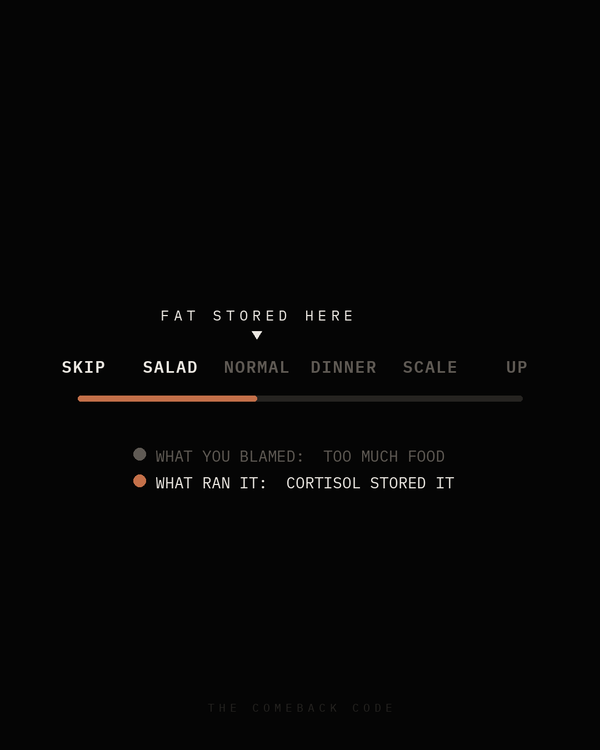
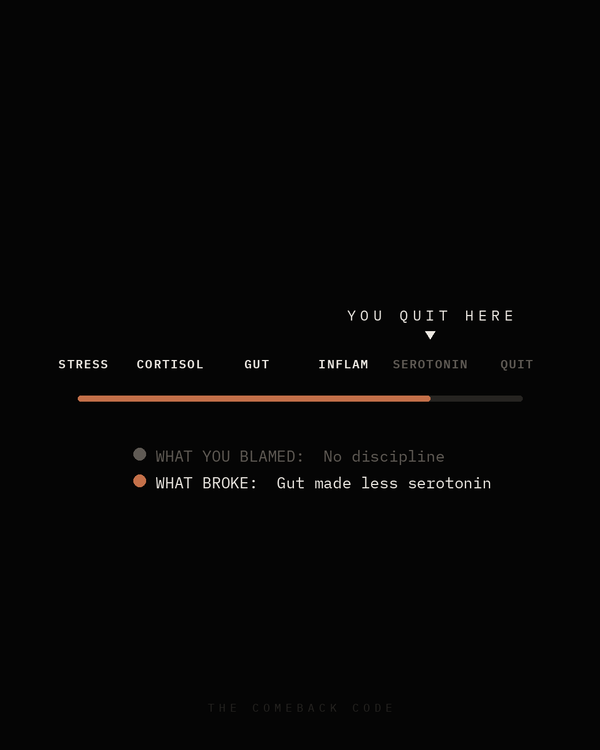
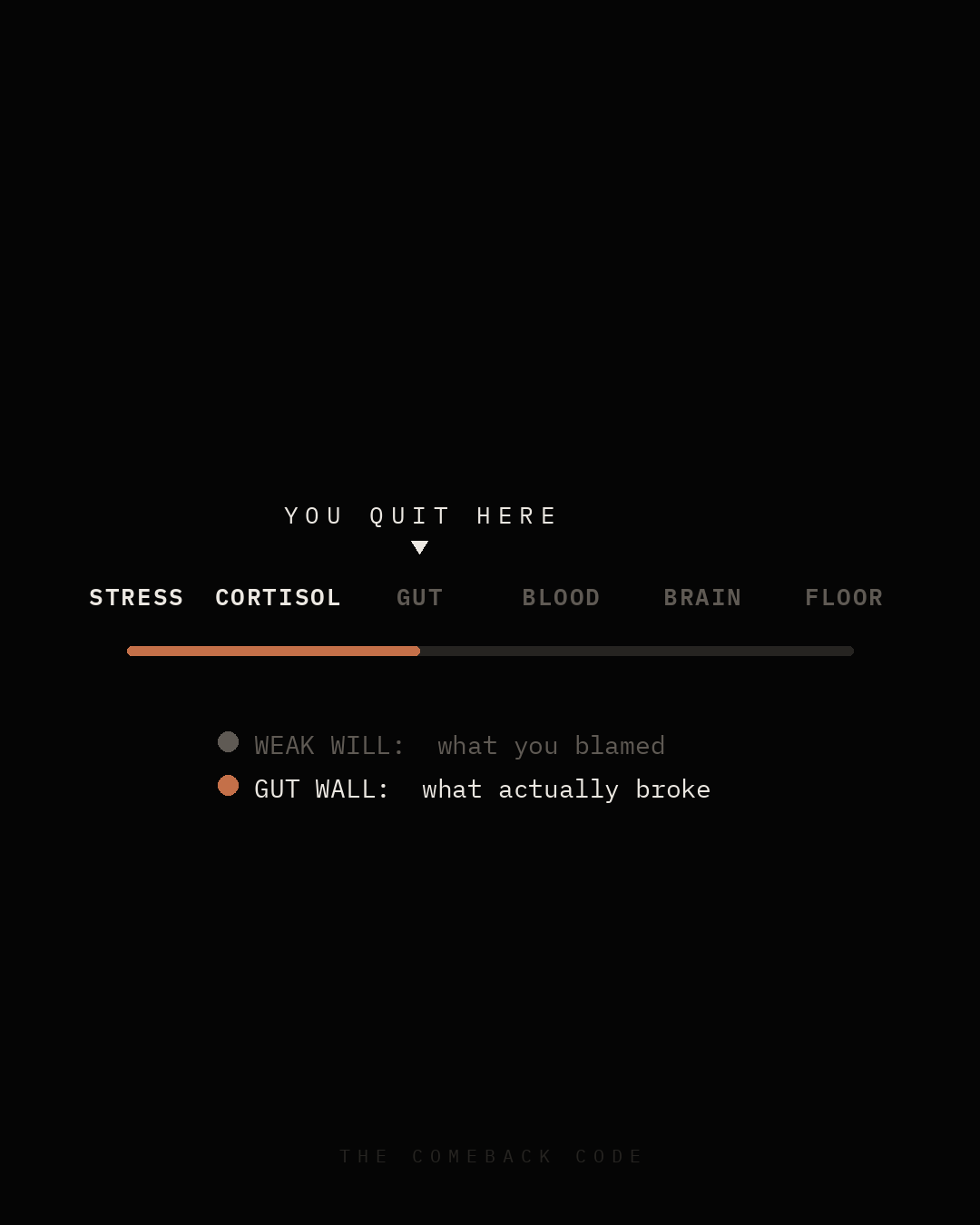
Here is what chronic stress does. Cortisol spikes. Sustained cortisol wears down the wall of your gut. Not a metaphor. The physical lining gets weaker. When that lining weakens, bacteria leak through into your bloodstream. Your immune system treats them as invaders. Inflammation spreads. That inflammation crosses into your brain.
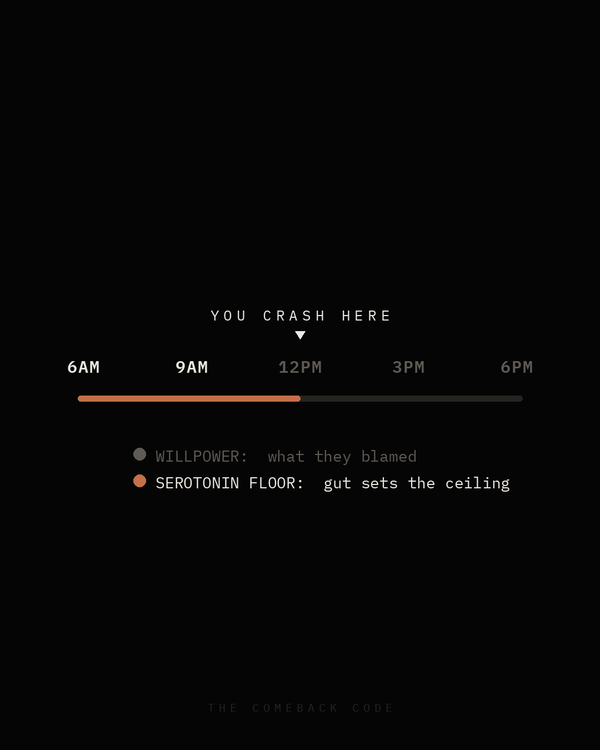
The result: fog, low mood, suppressed motivation. Not because you are weak. Because your gut cannot produce serotonin the way it was built to. A damaged gut sets a low serotonin floor. You cannot willpower your way above your floor. Nobody can.
The discipline industry does not tell you this. It sells you accountability partners and 5am alarms because that is what it has. It is treating a biological problem with a motivational product. That is why the camp worked and home did not. The camp changed your gut environment. Home put the stress back. The stress dropped the floor again.
The Playbook
- Feed your gut bacteria first, not last. Add one fermented food daily: 150g of plain Greek yogurt, a small bowl of kimchi, or a glass of kefir. Not a supplement stack. One real food, same time every day, for 30 days. Consistency here matters more than variety.
- Cut the cortisol spike before it compounds. Ten minutes of slow nasal breathing before you eat in the morning. Inhale 4 seconds, exhale 6. This is not meditation. It is a cortisol interrupt. Eating in a stress state is a direct hit to your gut lining. Do this before the food, not after.
- Remove one friction point tonight. The broken treadmill was not bad luck. It was a friction point that met a motivation spike and won. Map your week. Find the one thing most likely to kill momentum on the first bad day. Fix it before the bad day arrives. A backup route, a home option, anything with fewer points of failure.
- Eat 30g of protein within an hour of waking. Three eggs plus 150g of cottage cheese. Protein drives tryptophan, which is what your gut uses to build serotonin. This is not about macros. It is about giving your gut the raw material to do its job. Skip breakfast, skip the input your gut needs most.
This week: Tonight, put one fermented food on tomorrow's grocery list and write down the one friction point that killed your last attempt. Do not fix both tonight. Pick one.
The version of you that worked at the camp was not a different person with better discipline. It was the same person in a lower-stress, better-fed environment. Your gut had what it needed. Your serotonin had a higher floor. The conditions did the work you were trying to do with willpower.
You were blaming your character for a problem that lived in your gut the whole time.