You Weren't Eating That Much. That Was the Problem.
The Problem
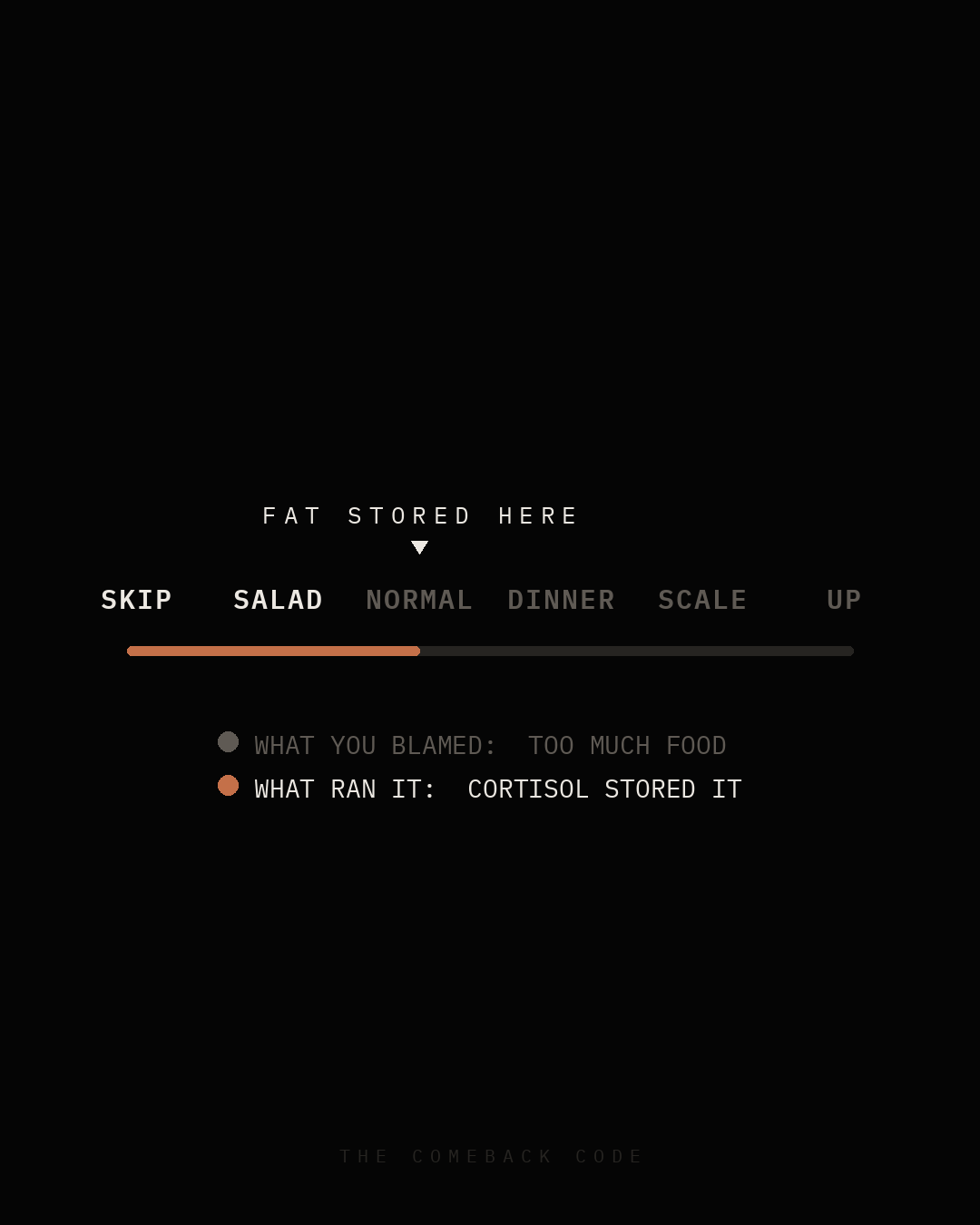
You skipped breakfast. Ate a salad for lunch. Had one normal dinner. And the scale kept moving the wrong way.
You weren't lying to yourself. You weren't in denial. You tracked it. The numbers were right. And it still didn't make sense.
That gap between what you ate and what your body did with it has a real explanation. It's not a character flaw. It's not laziness dressed up in excuses. Something mechanical went wrong, and it started long before you touched the food.
The Famine Signal
When you eat too little for long enough, your body reads it as a threat. Not a diet. A famine.
Skipping meals spikes cortisol. Cortisol is the stress hormone, and under stress, the body's one job is survival. It slows your metabolism to burn as little as possible. It holds onto fat because fat is stored fuel, and stored fuel is the only thing keeping you alive if food stays scarce.
Then you eat a normal dinner. A real meal. Nothing outrageous. But it lands in a system running at emergency efficiency. The body doesn't relax. It stores. Because that's exactly what a body designed to survive famine is supposed to do.
You weren't eating that much. That was the problem, not the fix.
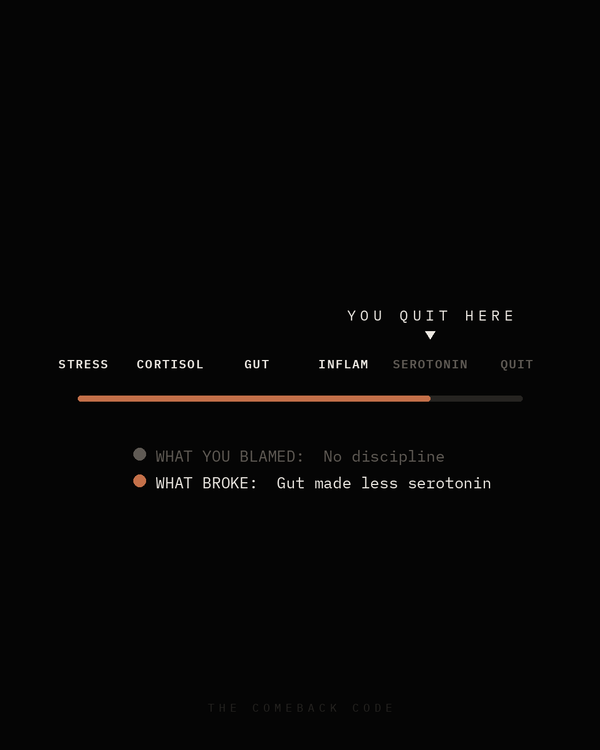
Chronic undereating keeps cortisol elevated. Elevated cortisol keeps metabolism suppressed. A suppressed metabolism stores more from less. The cycle doesn't break by eating less. It breaks when the body stops reading food as a threat.
This is why the friend who seems to eat freely and still loses weight isn't built differently. Their cortisol isn't running a famine alert. Their body isn't hoarding. The mechanism is the same. The signal is different.
The Playbook
- Eat breakfast within 90 minutes of waking. Not a large meal. 30 grams of protein, something you can actually prepare in five minutes. Eggs, Greek yogurt, cottage cheese. This single act tells cortisol the famine is over. It doesn't need to be optimal. It needs to happen.
- Stop going more than 4 to 5 hours without food during the day. Long gaps are the trigger. Every time you skip, cortisol climbs. Every time cortisol climbs, storage efficiency goes up. Three meals at roughly even spacing does more for your metabolism than the perfect macro split eaten once a day.
- Put protein in every meal, not just dinner. Aim for 30 grams per meal across three meals. That's 90 grams before you've done anything complicated. Protein costs the body more to process than fat or carbs. It also keeps cortisol lower after eating. You're not just feeding yourself. You're sending a signal that resources are available.
- Track total daily intake for two weeks before you cut anything. Most people in this pattern are eating 1,100 to 1,400 calories a day and thinking they're the problem. See the actual number first. You may need to eat more before your body will let go of anything. That sounds wrong. It is also what the research shows.
This week: Eat something with 30 grams of protein before 9am tomorrow. Don't change anything else yet. One meal, one signal, one morning.
The version of you that was fit before didn't have better willpower. That version existed in a body that wasn't running a cortisol loop. Life changed, stress went up, eating patterns shifted, and the biology followed.
You didn't lose discipline. The conditions changed.
That distinction matters, because the fix isn't trying harder. It's changing what your body believes is true about the food supply. And that starts with the next meal, not the next Monday.
Comment "Comeback" for the newsletter link.