The Broken Treadmill Wasn't the Problem
The Problem
You woke up early. On a Saturday. With actual motivation. That almost never happens.
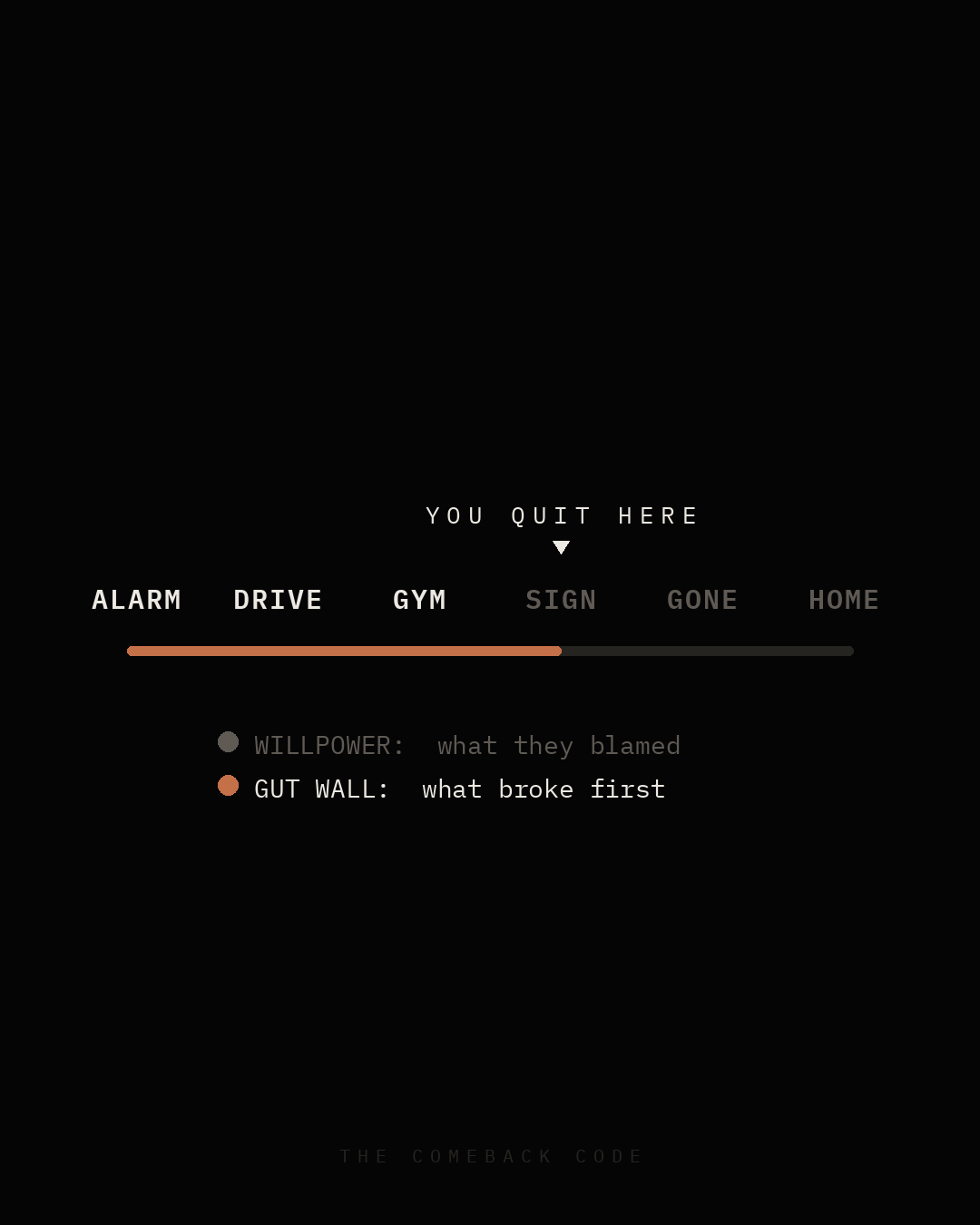
You walked down to the gym. The first two treadmills had been out for a week. The third one, the last one, had a handwritten "Out of Service" sign taped to the screen.
You went back upstairs. And that was it. Not just the workout. The whole day. The motivation didn't wait around for a backup plan. It was just gone.
The Environment Code
There's a reason you did fine at that health camp. Meals were made. Temptation wasn't there. The environment was built to work. And it did work.
Then you came home. Same body. Same brain. Completely different results. That's not a character flaw. That's a wiring problem you didn't know you had.
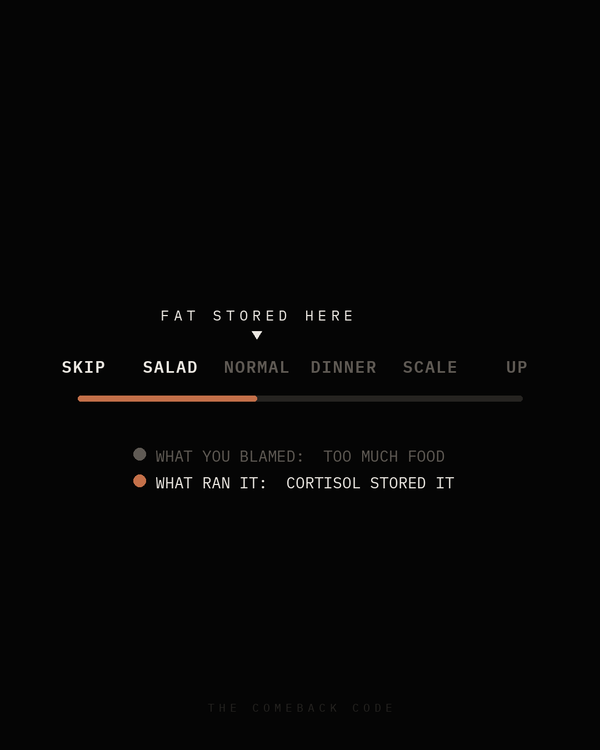
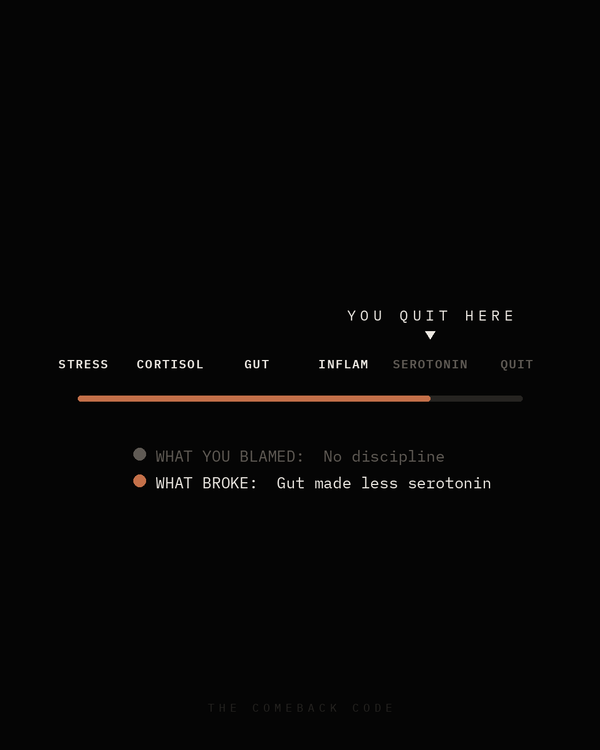
Here's what's happening under the surface. Chronic stress, the low-grade kind that runs in the background of a normal adult life, slowly wears down the wall of your gut. That wall is supposed to keep bacteria and waste inside the intestine. When it weakens, some of that material leaks out into your bloodstream.
Your body reads that as an infection. Inflammation kicks in. That inflammation travels up to your brain. And a brain running on systemic inflammation does not produce motivation on cue. It produces fog, flat mood, and zero interest in a treadmill that may or may not be working today.
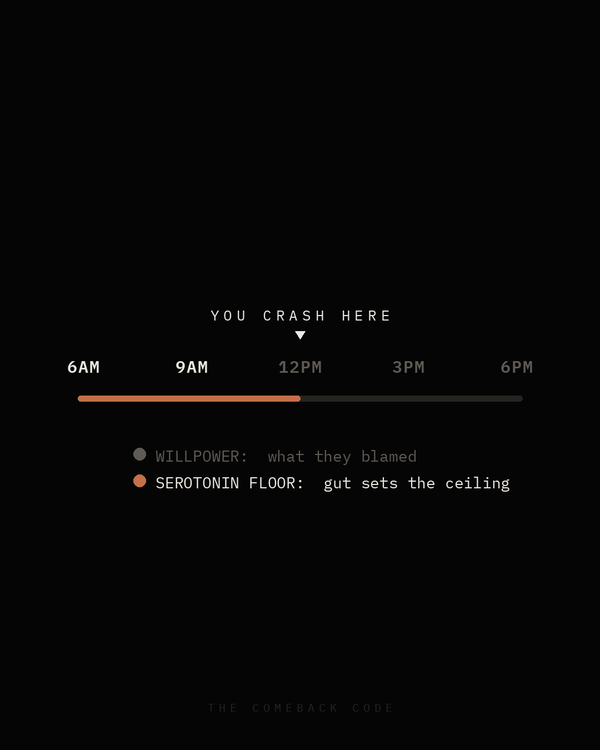
Your gut also makes about 90% of your body's serotonin. Serotonin is not just a mood chemical. It's the signal that tells you something is worth starting. When the gut wall is damaged, serotonin production drops. The floor of your motivation drops with it.
At camp, the environment reduced stress. Lower stress means the gut wall stays intact. The gut stays intact, serotonin holds steady, and you actually feel like doing the thing. You didn't change. The conditions changed. That's the whole story.
Five years of calling yourself lazy. The problem was never your character. It was a broken loop that started in your gut, not your head.
The Playbook
- Remove one friction point from your next workout before you go to sleep. Lay out your shoes. Pre-fill your water bottle. Find a second location now, not when the treadmill is broken. The brain under inflammation cannot problem-solve in real time. It needs the decision already made. Do it tonight, not tomorrow morning when motivation is on the clock.
- Add one fermented food to one meal, every day this week. A small cup of plain yogurt. A few forkfuls of sauerkraut. A bottle of kefir. These foods introduce live bacteria that help repair the gut wall from the inside. Not a protocol. One addition. Concrete: 100g of plain yogurt with lunch, every day for seven days.
- Cut your first workout this week in half. If you planned 30 minutes, do 15. This is not about being easy on yourself. A shorter session you actually finish sends a completion signal to the brain. That signal starts rebuilding the expectation that you follow through. You are not training your body this week. You are training the loop.
- Identify your single highest-stress trigger and put a 10-minute gap before it. The morning email check. The first Slack notification. The news. Cortisol spikes fast and degrades your gut wall within hours of a sustained stress response. A 10-minute gap before that first hit is not a wellness habit. It's structural protection for the system that makes motivation possible.
This week: Before you go to sleep tonight, pick a backup workout location and write it down somewhere you'll see it tomorrow morning. Not a gym. A sidewalk, a stairwell, a parking lot. Somewhere with no machines to break.
The grief of knowing something worked and not being able to hold the conditions that made it work. That's the real thing nobody talks about. The camp wasn't a trick. The result was real. The environment was just doing half the work, and nobody told you.