Why You're Flat in the Morning and Bloated by Night
The Problem
You wake up and your stomach is flat. By 8pm it looks like you swallowed a basketball. You haven't eaten badly. You haven't skipped the gym. But by evening you're unbuttoning your jeans on the couch and wondering what went wrong.
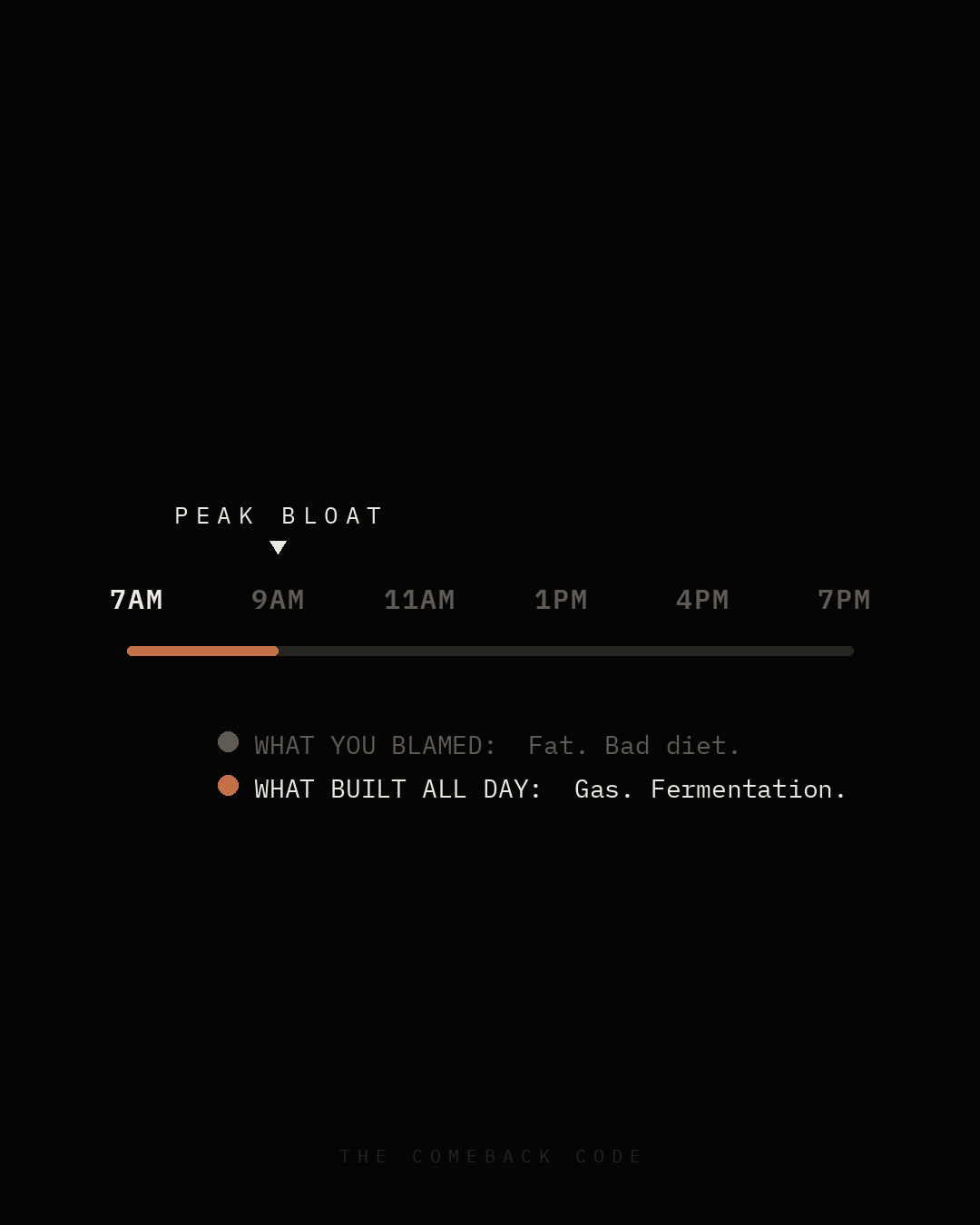
Most people assume it's fat. It isn't. Fat doesn't appear in twelve hours and vanish by morning. What you're feeling is gas and trapped fluid, and both of them have a source.
The fitness industry ignores this. It tells you to eat less, drink more water, cut carbs. None of that touches why it's happening in the first place.
The Bloat Code
Your gut is full of bacteria. When those bacteria are balanced, they break food down cleanly. When they're off, they ferment it instead. Fermentation produces gas. A lot of it. That gas builds through the day with every meal, which is why you're fine at 7am and miserable at 7pm.
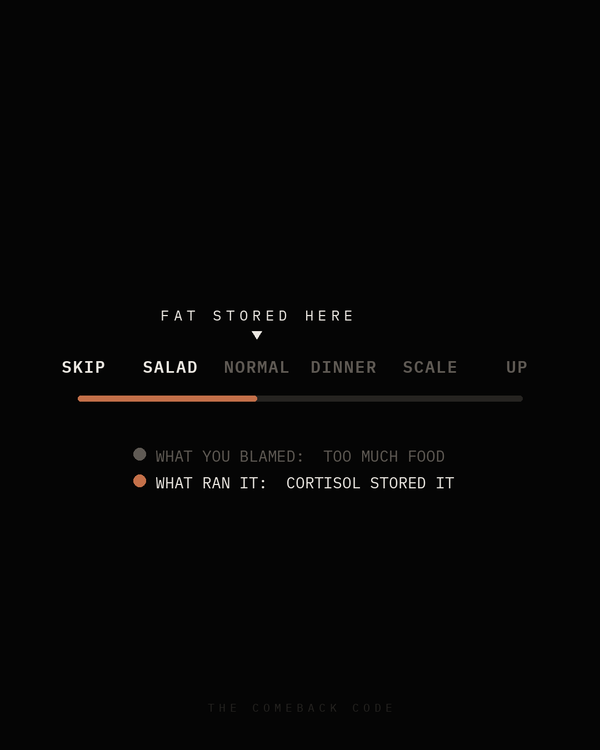
Now add stress. When cortisol runs high, your digestion slows down. Food sits longer. The bacteria have more time to ferment it. More gas. More pressure. More bloat.
There's a second problem running at the same time. Chronic stress wears down your gut wall. A healthy gut wall is tight. It keeps what should stay inside, inside. When cortisol erodes it, that wall loosens. Fluid leaks into surrounding tissue. Your body reads this as a threat and holds onto more water. That's the swelling you feel pressing against your waistband by evening.
This isn't a willpower problem. It's not poor food choices. It's a gut that's been under sustained stress long enough that it can't do its job properly anymore.
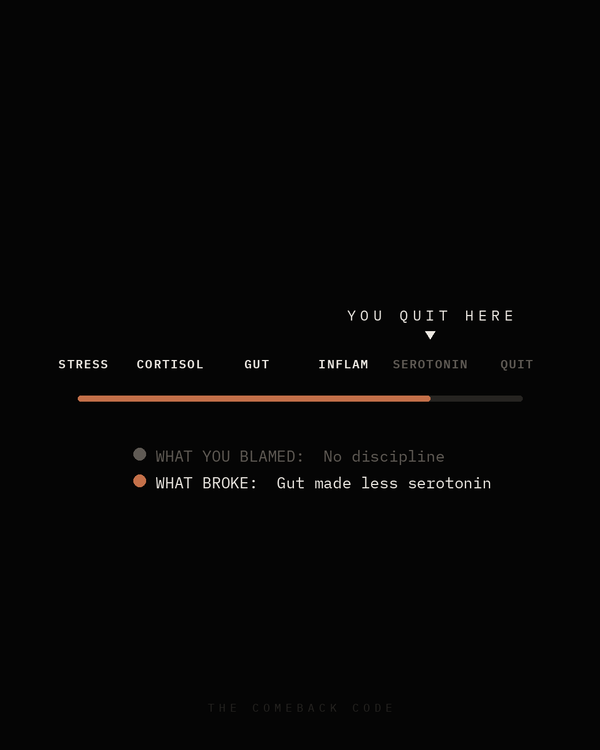
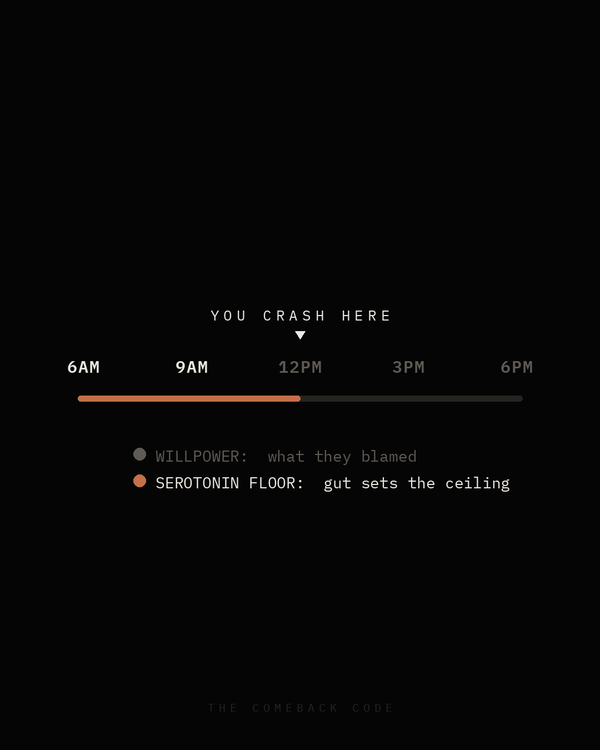
About 90% of your serotonin is made in your gut. A gut under this kind of strain produces less of it. Less serotonin means lower mood, lower drive, worse sleep. And poor sleep raises cortisol the next morning. The cycle repeats before you even eat breakfast.
The bloat is the visible symptom. The stress-gut loop underneath it is the actual problem.
The Playbook
- Eat your biggest meal before 2pm. Cortisol is naturally lower in the afternoon and drops further into the evening. Digestion slows with it. A large meal at 8pm sits in a slow system with off-balance bacteria. That's a gas factory. Shift your calories earlier and your gut has time to process them before your body winds down.
- Cut carbonated drinks completely for two weeks. Not "reduce." Cut. Every sip of sparkling water or soda pushes gas into a system that's already producing too much of its own. Two weeks without it gives you a clean read on how much of your evening bloat is coming from drinks alone. Most people are surprised.
- Add one tablespoon of raw apple cider vinegar to 200ml of water before your largest meal. It raises stomach acid. Higher stomach acid means faster, cleaner breakdown of food before it reaches the bacteria lower down. Less fermentation. Less gas. This is not a fix for the gut wall or the cortisol, but it reduces gas production at the source while you work on the bigger issue.
- Put a ten-minute walk after dinner on your schedule, not your intentions. Walking after eating speeds gastric emptying by roughly 30%. Food moves through faster. The bacteria get less time to ferment it. You don't need a gym or a plan. You need to move before you sit on the couch for the night. Set a timer. Go outside. Ten minutes.
This week: Tonight, after your last meal, walk for ten minutes before you sit down. That's the only change. Do it before you think about anything else on this list.
The bloat isn't showing you what you ate today. It's showing you the state of your gut after months of stress running through it. One good night doesn't fix that. But one walk is still a different night than last night.